
The Immune Alliance: Why Your Pet's Health Depends on Nine Organs Working Together


Your pet doesn't have an immune system. They have an alliance.
I gave a webinar recently on something I think most pet owners have never been told: there is no such thing as "the immune system." Not really.
What we call the immune system is actually an alliance. Nine different organs, each doing their own job, each stepping in at a different point to protect your pet's body from illness. The spleen filters blood. The thymus trains specialized cells. The liver detoxifies. The stomach uses acid to destroy pathogens before they ever get a foothold. Even the skin is standing guard.
I love this time of year, but late summer also means more boarding, more dog parks, more group play dates, and more exposure to whatever is going around. It is the perfect month to talk about what actually keeps our pets well, and why supporting immunity is never as simple as a single supplement.
As the saying goes, what is referred to as "the immune system" cannot be enhanced without enhancing the overall health of the whole body in complete resistance to disease. That idea is the thread running through everything in this post.
Meet the Immune Alliance
When people ask me how to "boost" their pet's immune system, my first answer is always the same. Which part of it?
Here are the nine members of your pet's immune alliance, and what each one actually does:


When this alliance is under strain, I tend to see it show up as recurring infections, wounds that heal slowly, digestive upset, skin flare-ups, or a pet who just seems a little more tired than usual. None of these are a single organ's fault. They are a sign the whole alliance needs support, not just one member of it.
Food First, Then Support
Here is something that changed how I think about supplementation entirely.
Researchers at Cornell University compared the antioxidant activity of a whole apple extract, skin included, to purified isolated vitamin C. The apple extract contained only 5.7 mg of vitamin C, a fraction of a percent compared to the 1500 mg of purified vitamin C it was tested against. And yet the antioxidant activity of the two was equal.
The researchers concluded that almost all of the antioxidant power in an apple has nothing to do with its vitamin C content at all. It comes from the phytochemicals, especially the ones concentrated in the skin, working together as a whole.
This is exactly the philosophy behind how Standard Process builds their products, and it's why I recommend Cataplex® C the way I do. The label only lists 5 mg of ascorbic acid, and I get asked about that constantly. But Cataplex® C was never built to hit a number on a label. It was built to support the body the way a whole food does, with the full complex of nutrients working together the way nature intended.
There is also a fascinating calcium connection worth knowing. A 1998 study published in Microbial Pathogenesis found that the body's ability to destroy
Mycobacterium tuberculosis, one of the most resilient pathogens there is, depended directly on the availability of calcium. If calcium can support the body against something that formidable, it makes sense why Calcium Lactate plays a role in whole-body immune support too.
This Month's Immune Support Bundle
A wound is one of the most direct ways a pathogen can bypass your pet's skin, the immune alliance's first line of defense. This bundle pairs hemostatic support with infection resistance, plus the calcium connection above.
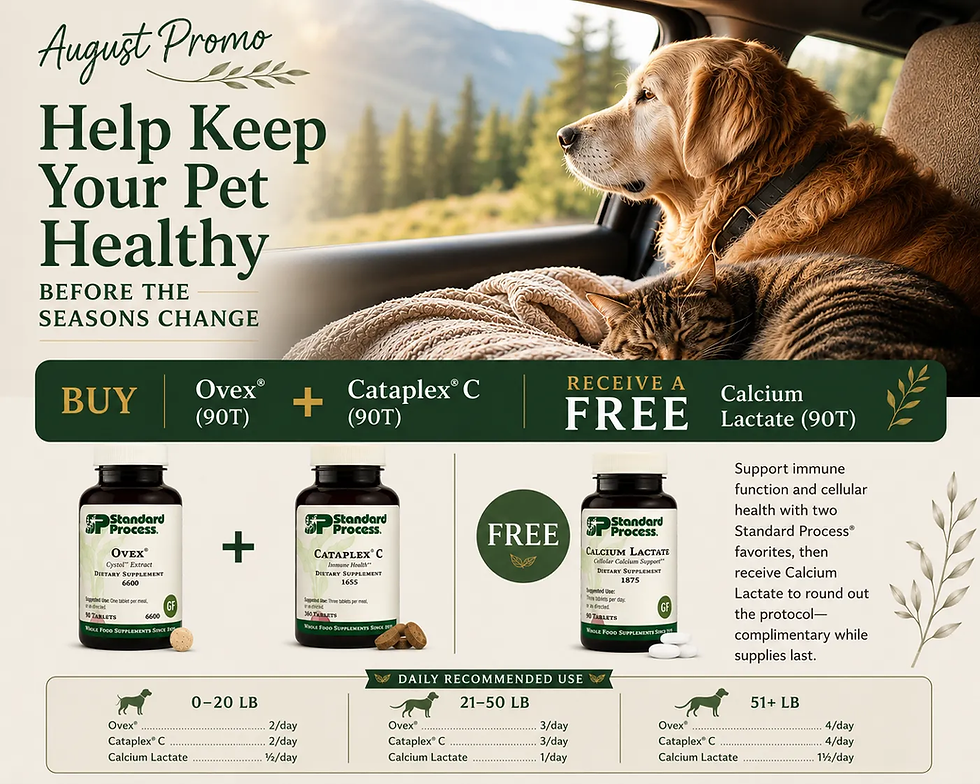
These three products work together to support your pet's immune alliance through one of the most vulnerable moments: when the skin barrier has been compromised.
Why a Whole Apple Beats a Vitamin C Pill
You've probably seen vitamin C pills advertised as immune support. The marketing makes sense: vitamin C is good for immunity, so isolated vitamin C must be better, right?
Since the beginning of time, we've consumed vitamins and minerals in food form. Our cells are designed to take up nutrients like vitamin C alongside their full array of companion nutrients, not in isolation.
When Cornell researchers tested a whole apple extract against purified vitamin C, the apple matched the antioxidant activity of the isolated vitamin at nearly 300 times the concentration, despite containing almost none of it. The takeaway is simple: favor whole foods first. There is plenty of vitamin C in a diet rich in fruits and vegetables, for pets and people alike.
This is why I focus on building your pet's foundation with whole-food nutrition and Standard Process supplements that work the way nature intended—not isolated nutrients that miss the entire ecosystem of cofactors and phytochemicals that make them actually work.
Your Pet's Alliance is Waiting
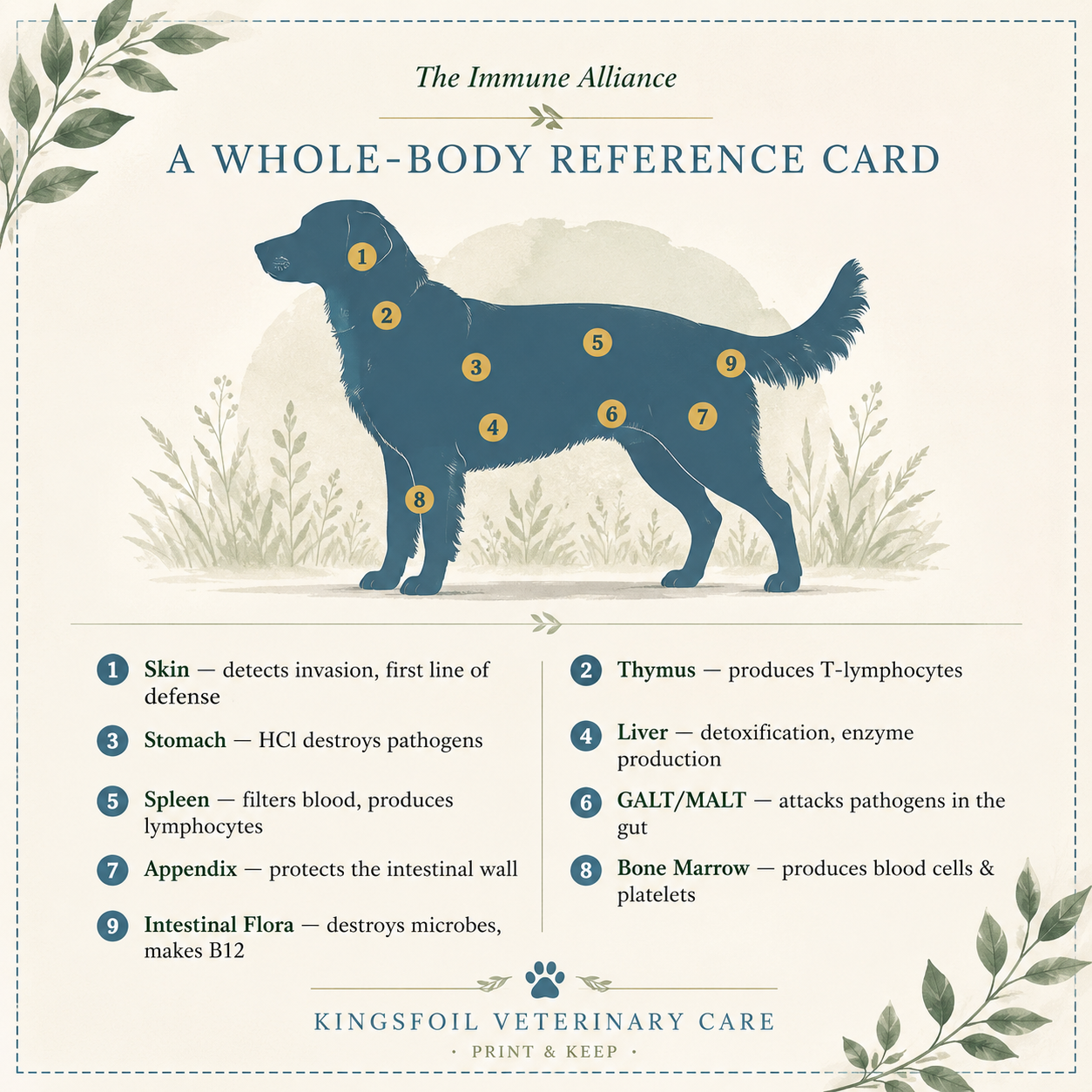
Your pet's immune alliance is only as strong as its weakest member. And that means true immunity support isn't about one supplement or one organ. It's about supporting the whole body, the whole nine-member team, so they can do what they're designed to do: keep your pet healthy and resilient.
If you've noticed recurring infections, slow-healing wounds, digestive issues, or skin flare-ups, this is a sign your pet's immune alliance needs support. I'd love to work with you to build a personalized protocol that addresses the root cause.
Call us at (719) 247-1517 or email support@kingsfoilvet.com. Stop by Kingsfoil Vet in Colorado Springs. Let's support your pet's whole health together.


Comments